Violence Erupts as Uganda Faces Tense Election Aftermath
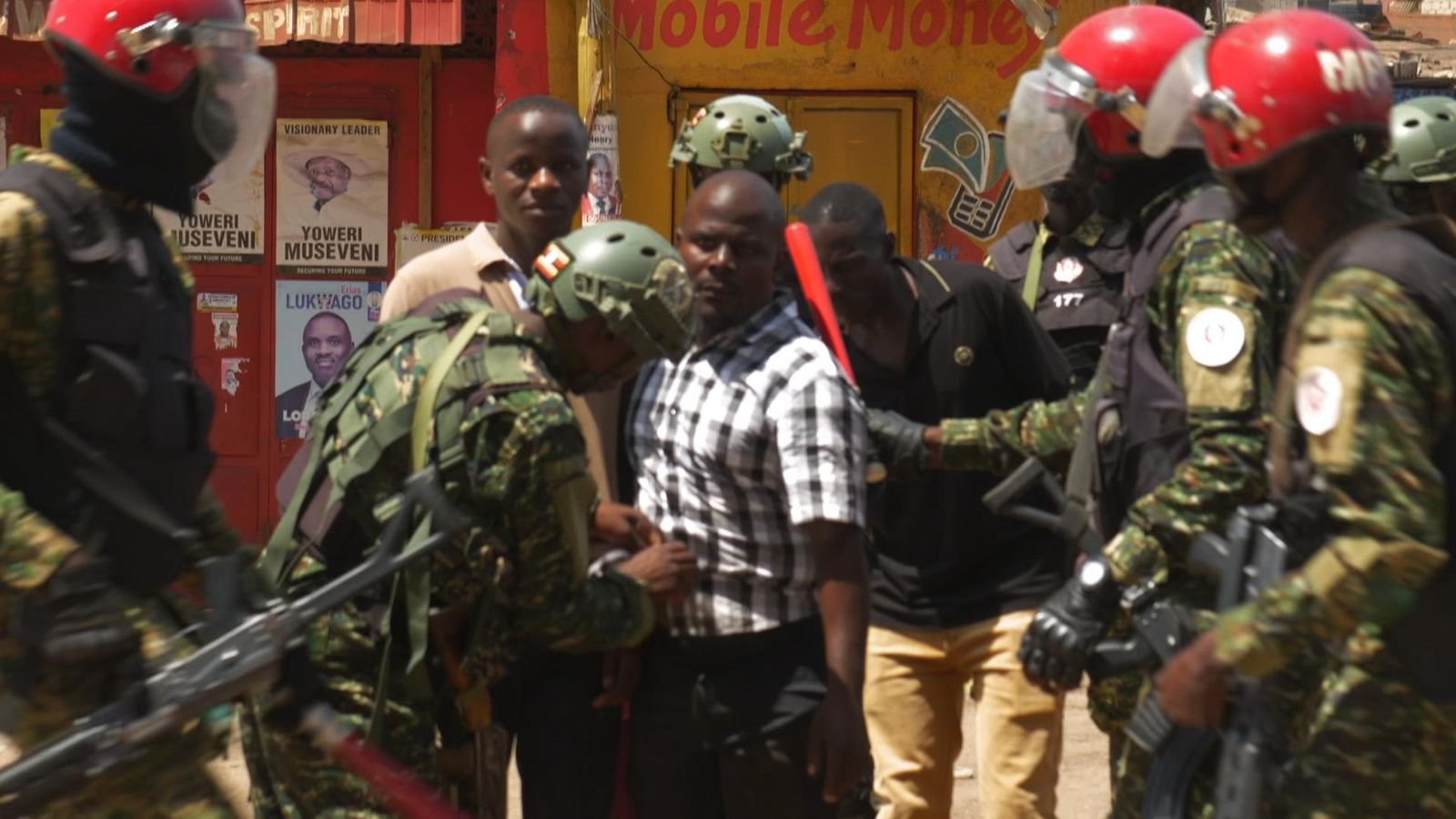
In central Kampala, armed military personnel have clashed with civilians amidst growing tensions surrounding Uganda’s presidential election. Reports indicate that security forces are engaging aggressively with protesters and journalists as the nation awaits the results of a disputed electoral process, raising fears of escalating violence and suppression of dissent.
Military Crackdown on Protesters
Witnesses described scenes of chaos as soldiers demanded journalists kneel in front of shops near Kibuye roundabout. The sound of gunfire and stun grenades echoed through the busy area as security forces conducted a heavy-handed operation against demonstrators calling for an end to President Yoweri Museveni’s long-standing rule.
Numerous soldiers, some masked, were on the scene to enforce temporary detentions. The threats aimed at journalists made it evident that their presence was unwelcome alongside the numerous protesters. After a tense standoff, a senior commander briefly allowed journalists to retain their equipment, warning them not to cause embarrassment to the military.
Media Blackout and Internet Shutdown
As tensions escalated, Uganda has enforced a state-mandated blackout of internet services, complicating media efforts to cover the unfolding unrest. Local journalists report being targeted, as one shared of being beaten by security forces despite identifying himself as a member of the press.
Public Outcry Against Disputed Results
Protests erupted following the counting of votes, where many citizens expressed outrage over what they perceive as rigged results favouring Museveni. Eyewitness accounts reveal a visibly agitated crowd, with supporters of opposition leader Bobi Wine loudly proclaiming, “people power!” from their vehicles. Eyewitnesses noted a general sentiment among the public that the election was rigged against their candidate.
Reports from the opposition party, the National Unity Party (NUP), indicate that security forces have intensified their crackdown, with allegations of home invasions and abductions of party members. Wine’s recent detention has fuelled further unrest, with warnings that this could lead to national protests rivaling those of the 2021 election.
Background
President Yoweri Museveni, who has held power for over four decades, faced significant antagonism during this election cycle from alternative voices such as Bobi Wine, a popular musician turned politician. The political climate has been increasingly fraught, with allegations of election malpractice becoming a focal point of dissent. The international community’s response to this ongoing situation is being closely monitored, as many observers express concern over the rights and freedoms of Ugandans.
Protests, detentions, and the overarching atmosphere of fear regarding freedom of expression highlight the precarious balance between governance and civil liberties in Uganda. The unfolding events are shadows of political brutality often seen in authoritarian regimes, raising critical questions about the future of democracy in the country.
Source: Original Article