






















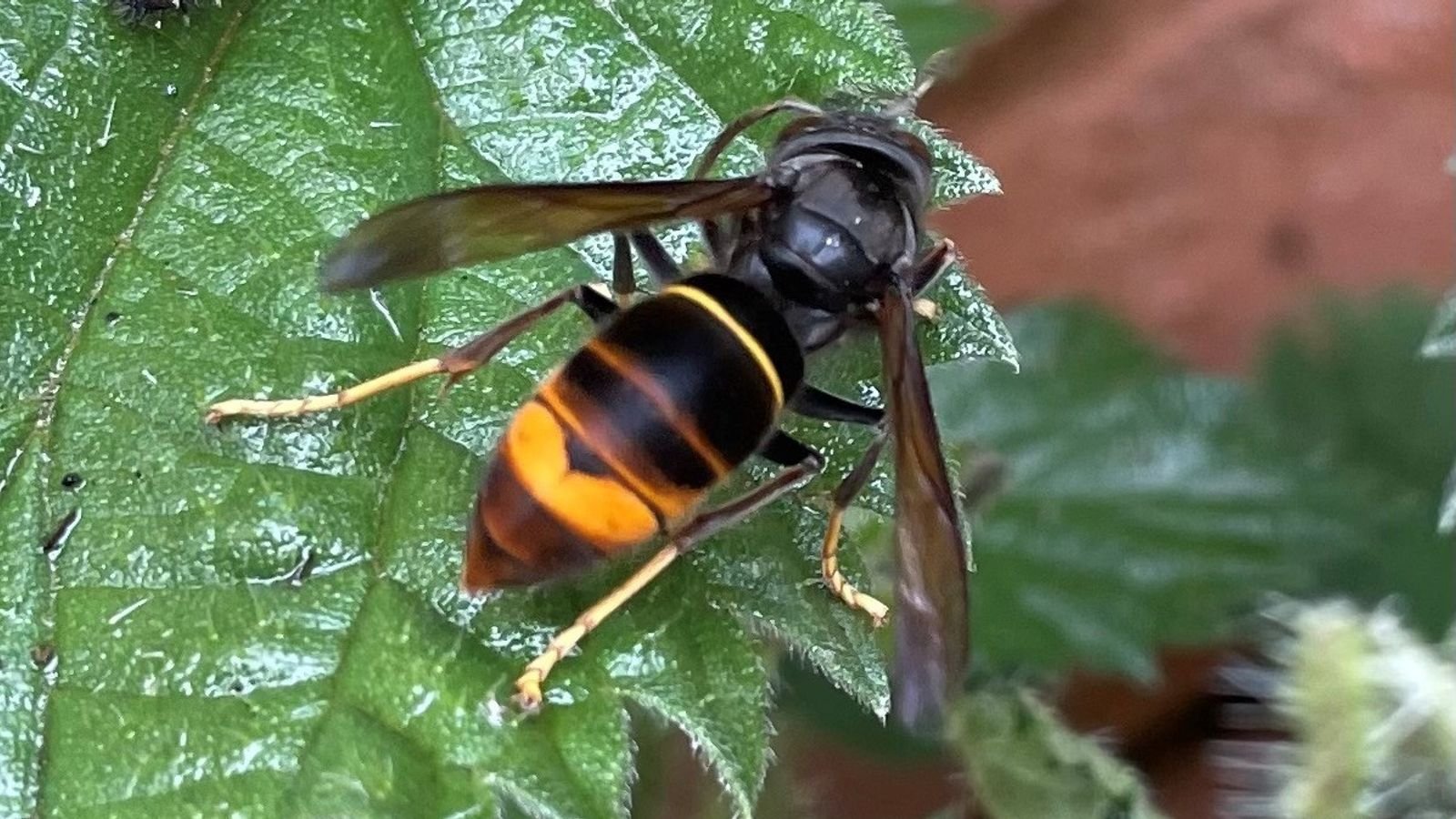
First Detection of Invasive Asian Hornet Nest in Wales
A predatory nest of Asian hornets has been identified for the first time in Wales, leading the Welsh government to issue a warning. The discovery, made near Wrexham, marks a significant milestone as this species, known for its threat to honeybee populations, has primarily been confined to southern England.
About the Asian Hornet
Commonly referred to as the yellow-legged hornet, this invasive insect hails from East Asia and was first recorded in Europe in 2004. The species made its debut in the UK approximately a decade ago, predominantly during the summer months in southern regions. Although the Asian hornet is not generally aggressive towards humans, it has the capacity to consume an estimated 50 honeybees per day, raising concerns over the impact on pollinator numbers.
Government Response and Public Vigilance
The wooden nest found was unfortunately empty; however, the Welsh government is urging citizens to stay vigilant and report any suspected sightings of the hornets. Deputy First Minister Huw Irranca-Davies emphasized the expertise of the National Bee Unit in monitoring and managing this invasive species across Wales.
“We appreciate the efforts of beekeepers and the public in staying alert and reporting their findings,” he stated, encouraging familiarity with the hornet’s appearance as warmer weather approaches.
Background
As the invasive Asian hornet continues to spread, its presence poses a threat not only to the bee population but also to biodiversity in the UK. The hornet is a key predator of pollinators, and as it expands its range, the ecological balance of local environments could be further disrupted. The monitoring and management of such invasive species are crucial in preserving native wildlife and agricultural productivity.
The emergence of this hornet species highlights the importance of community awareness and government-led initiatives to protect local ecosystems. As warmer months approach, public education and vigilance will be crucial in mitigating the potential impact of this invasive species.
Source: Original Article






