






















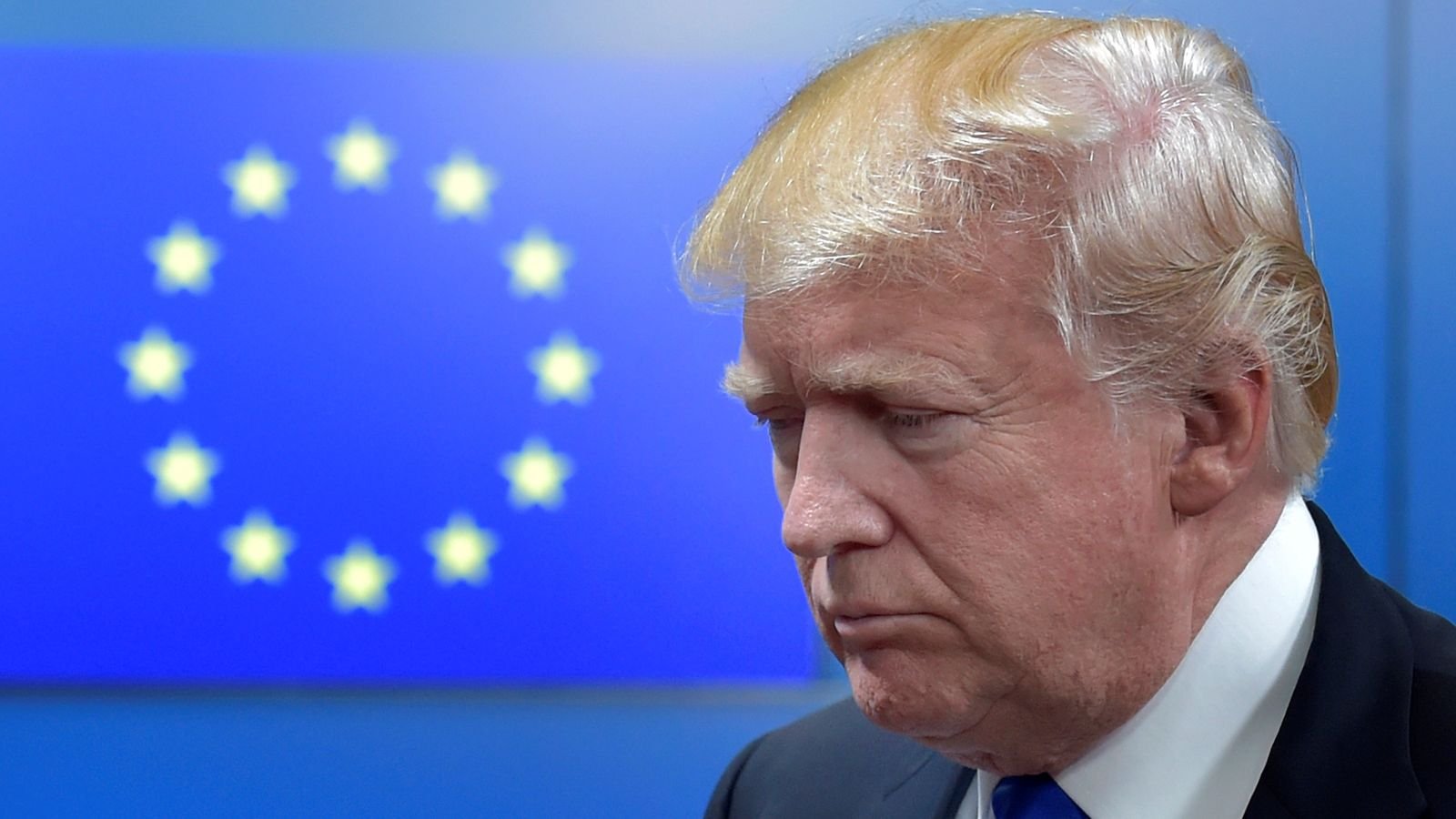
Transatlantic Tensions Rise Over Greenland
The European Union is facing a significant diplomatic challenge as it grapples with President Trump’s assertive stance on the acquisition of Greenland, raising concerns that could lead to a major transatlantic confrontation. Multiple EU nations are expressing alarm over potential tariffs against several countries, including the UK, and are contemplating retaliatory measures.
The Mood in Brussels
The atmosphere among EU leaders is one of both resolve and worry. There is a growing acknowledgment that President Trump is serious about his ambitions regarding Greenland, which could disrupt longstanding diplomatic relations. Many European capitals are united in their belief that any coercive attempts to seize Greenland are unacceptable and are criticizing the recently announced tariffs.
Calls for a Strong Response
During a recent meeting of EU ambassadors in Brussels, French President Emmanuel Macron proposed the strongest possible reaction by advocating for the activation of the EU’s anti-coercion instrument. This mechanism, initially conceived to deter aggressive behaviours from countries like China, is now being considered for use against the United States, a historically close ally.
Implementing this measure would enable the EU to impose retaliatory tariffs, restrict US investments, and limit American access to the European single market. This would be unprecedented, as such powerful trade measures have never been employed against Washington before.
Strategic Options for the EU
The EU is weighing several potential courses of action in response to Trump’s tariffs, which are set to be implemented on February 1. Among the options discussed are:
- Triggering retaliatory tariffs through the anti-coercion instrument.
- Postponing the ratification of the recently negotiated EU-US trade agreement.
- Continuing diplomatic efforts in hopes of achieving a resolution.
Although any suspension of trade negotiations could have consequences for Europe as well, some EU leaders believe they hold a stronger bargaining position than the US, especially after sealing a significant free trade agreement with the Mercosur bloc of South American nations.
Looking Ahead
The upcoming World Economic Forum in Davos presents an opportunity for leaders, including Trump, to engage in direct discussions. However, for these negotiations to be effective, EU officials will need to present a united front and develop coordinated retaliatory strategies. This critical window allows for potential measures to be debated before the tariffs take effect.
Background
The current situation escalates existing trade tensions that have marked Trump’s presidency, often characterised by his unpredictable approach to international relations. The ongoing dispute over tariffs and trade agreements reflects a broader struggle between traditional allies navigating an increasingly complex geopolitical landscape.
As the EU prepares to confront the unfolding crisis, its response could set new precedents for transatlantic relations going forward. The stakes are high as both sides assess their positions within what is shaping up to be a significant diplomatic standoff.
Source: Original Article






