






















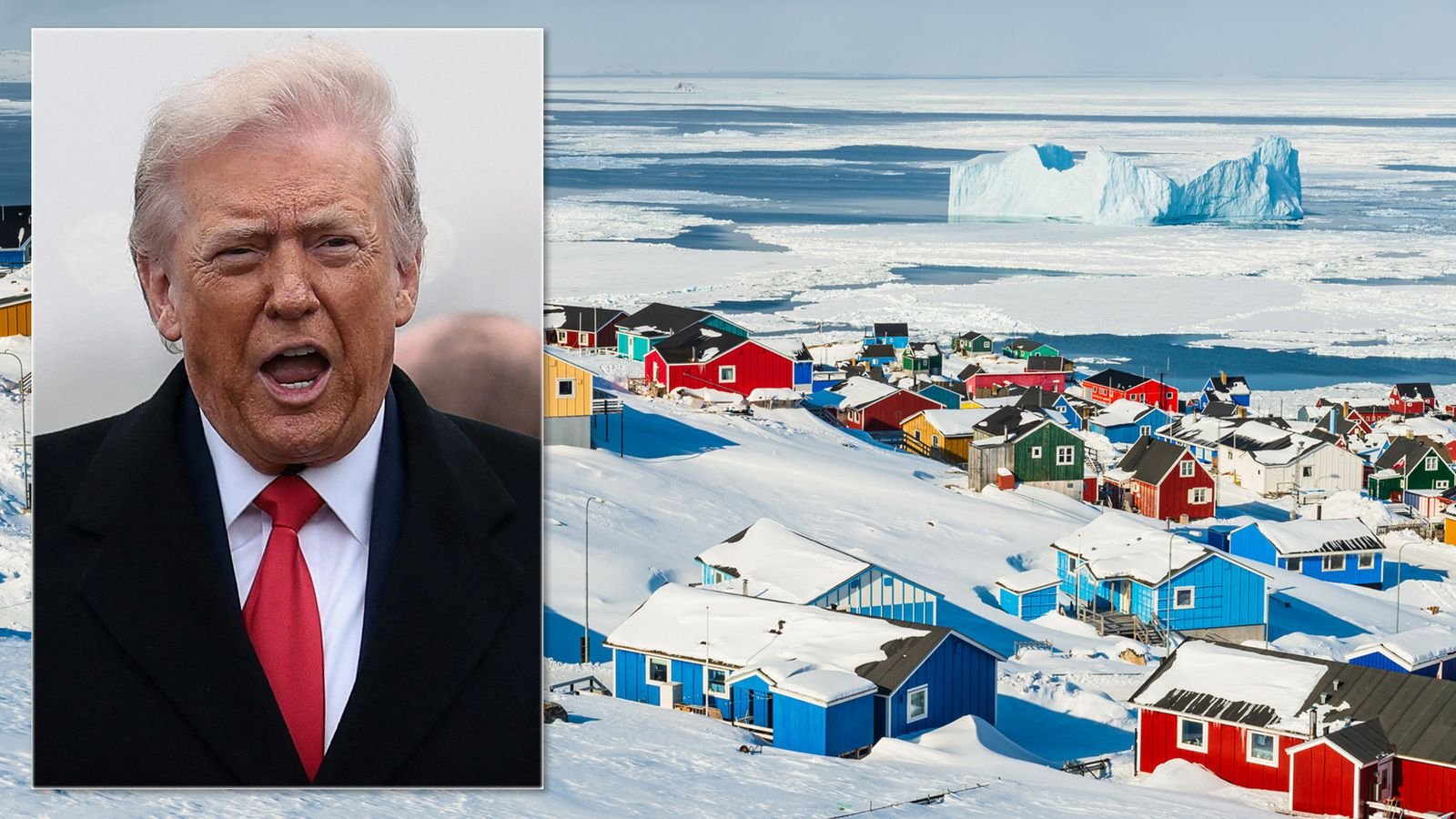
UK Leaders Navigate Trump’s Greenland Tariff Threat
The ongoing tensions surrounding Greenland have put UK Prime Minister and Labour leader Keir Starmer at a crossroads this election year. As Mr. Starmer aimed to connect with voters through a cost of living tour, his plans were interrupted by President Donald Trump’s recent tariff threats targeting goods from the UK and several other European nations.
Trump’s Bold Moves
President Trump has proposed imposing an additional 10% tariff on imports from the UK, France, Germany, the Netherlands, Norway, Sweden, and Finland, starting from 1 February. This unexpected development has prompted urgent discussions among UK officials and European allies in Downing Street, raising concerns over the implications for transatlantic relations.
One UK official remarked on the perplexity of the situation, commenting, “It’s through the looking glass,” capturing the unpredictability surrounding Trump’s stance.
Starmer’s Response to the Tariff Threat
In a statement, Mr. Starmer condemned the proposed tariffs as “completely wrong,” asserting that Greenland’s fate should be determined by its own people and the Danish government. His remarks come amid a joint statement issued by the UK and the aforementioned European countries, which emphasized that such tariff threats jeopardize the stability of transatlantic relations.
European Allies’ Concerns
Following the tariff announcement, European NATO members commenced a reconnaissance mission in Greenland, which some believe may have contributed to Trump’s aggressive posture. Italian Prime Minister Giorgia Meloni suggested that Trump may have misinterpreted these military exercises, clarifying that they were designed to address concerns regarding Russia and China, rather than targeting the US.
Implications for Transatlantic Relations
The UK government is striving to manage the fallout. Officials are working to engage Trump in discussions aimed at reversing his tariff threats while simultaneously affirming Denmark’s sovereignty over Greenland. Senior government sources have indicated that the Trump administration is currently not receptive to diplomatic reassurances from European nations about their commitment to Arctic security.
Concerns Over NATO’s Future
This development raises critical questions about the durability of the NATO alliance, with concerns that Trump’s unilateral approach may undermine collective security arrangements. The sentiment among European leaders at the upcoming Davos summit will likely reflect a strong desire to reaffirm their commitment to work cooperatively with the US through existing frameworks.
Background
President Trump’s previous inclination towards America’s unilateral interests has raised alarms. His long-standing ambition to acquire Greenland, viewed as a strategic asset, exemplifies a shift in foreign policy that prioritizes national over multilateral interests. This pattern risks isolating the US from its traditional allies, complicating global issues ranging from regional security to economic cooperation.
Conclusion
As the UK government attempts to defuse the tension, PM Starmer faces a delicate balancing act: advocating for national interests without alienating key allies. The situation remains fluid, with the potential for escalation, underscoring the urgency for diplomatic engagement to safeguard transatlantic ties and regional stability.
Source: Original Article






