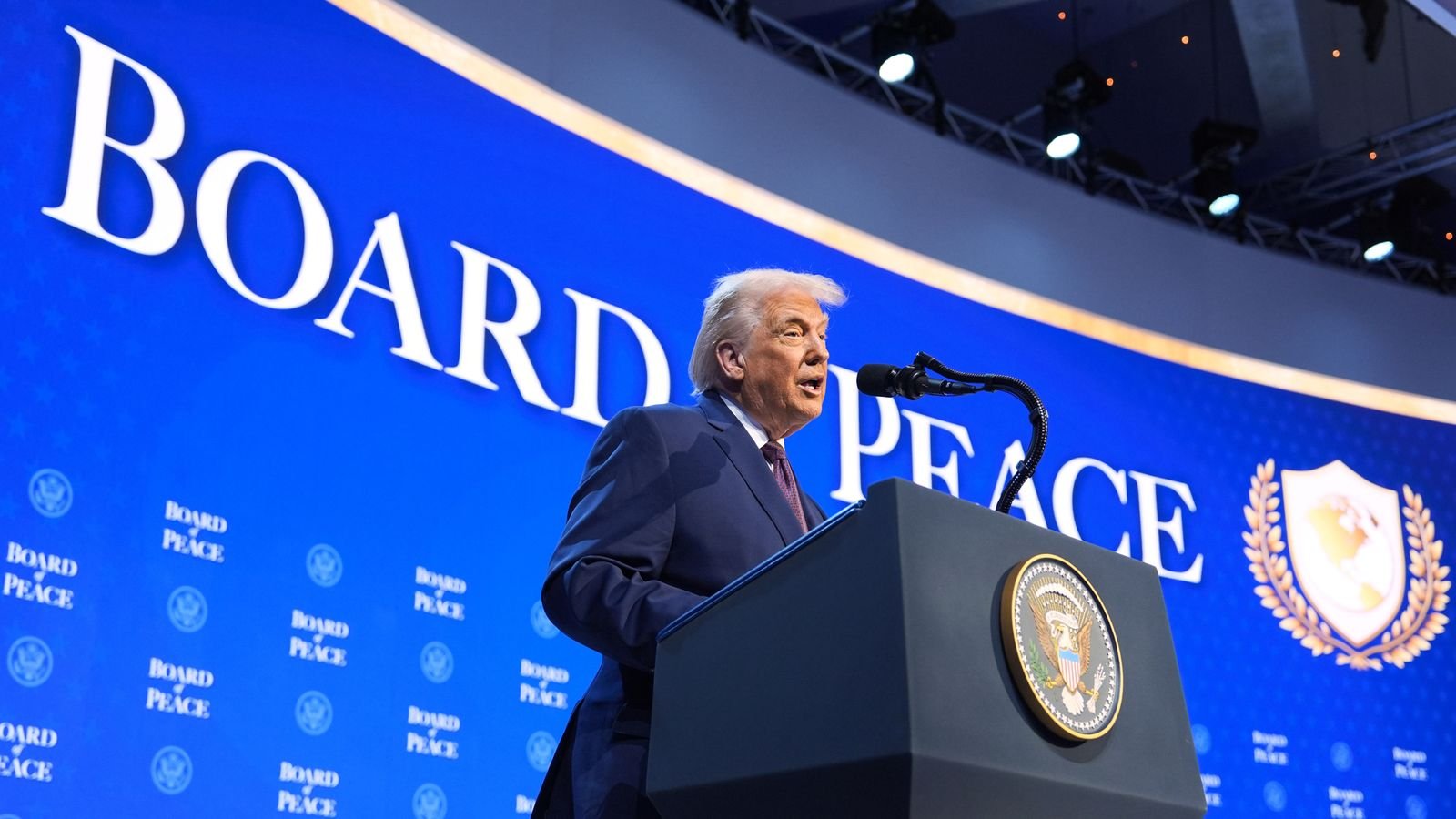
New Dimensions of Trump’s Board of Peace: A Shift from Gaza
The original concept of a Board of Peace, articulated four months ago, was closely associated with the future of Gaza. However, following recent developments, the board’s vision has broadened significantly, encompassing a wider array of global issues and moving at an accelerated pace.
Expanding Vision and Ambitions
During its inaugural meeting, members of the Board of Peace aligned on an expansive agenda. The board has now adopted a multifaceted approach, suggesting not only solutions for Gaza but addressing a multitude of international challenges. Notably, this shift became apparent during discussions at the World Economic Forum in Davos, highlighting the board’s intent to broaden its scope.
Kushner’s Economic Vision for Gaza
Jared Kushner, a prominent figure on the board and son-in-law of former President Donald Trump, presented his ambitious vision for Gaza in a preparation meeting. His proposal casts Gaza not merely as a conflict zone but as a potential hub for economic development and investment. Rather than depend on humanitarian aid, Kushner advocates for a model driven by entrepreneurship, suggesting that this change could transform the region into a prosperous economic zone.
However, this optimistic outline starkly contrasts with the current reality in Gaza, where many live in dire conditions, highlighting the significant gap between aspiration and lived experience.
Questioning the Board’s Intentions
There are queries surrounding the board’s creation, especially its implications for existing international frameworks like the United Nations. Skeptics raise the point that an initiative emerging from a conflict in the Middle East might be seen as a competing entity to the UN. The history of criticism levelled at the UN, including claims of institutional bias and corruption, could provide fertile ground for this board to establish its relevance.
Relationship with the UN and Global Dynamics
Israel’s explicit disdain for the UN has been underscored by its recent actions to demolish the headquarters of the UN Relief and Works Agency (UNRWA), which it holds responsible for facilitating Hamas activities. This move has prompted the UN to condemn the demolition as an unprecedented aggression against its operations. Interestingly, many Israeli officials have expressed a preference for dealing directly with Washington rather than through UN channels.
Despite its positioning, the Board of Peace is unlikely to challenge the UN’s dominance in international diplomacy for the foreseeable future, especially in light of Europe’s scepticism towards the initiative.
Implications for Global Governance
Beyond its functioning, the board stands as a symbol of the shifting geopolitical landscape. The United States’ pivot towards this board suggests a move away from multilateral frameworks toward a more informal power structure led by Washington. Currently, the board appears focused on those who have close ties to Trump, further highlighting the exclusivity of this initiative.
The future, particularly if political dynamics change with a potential Democratic presidency in 2028, remains uncertain. The involvement of major powers like Russia, India, or China could significantly alter the board’s influence and objectives, potentially repositioning it within global power structures.
Background
The Board of Peace’s roots can be traced back to ongoing tensions in the Middle East, with earlier efforts focused primarily on negotiating peace in Gaza. As conditions in the region continue to oscillate, the board’s evolution into a broader platform marks a pivotal moment in diplomatic approaches undertaken by the United States.
In summary, the Board of Peace emphasises a significant departure from traditional peace initiatives, aiming to propose a new framework for international engagement. The shifting dynamics and challenges underlying this undertaking will likely continue to inform discussions in the international arena.
Source: Original Article