






















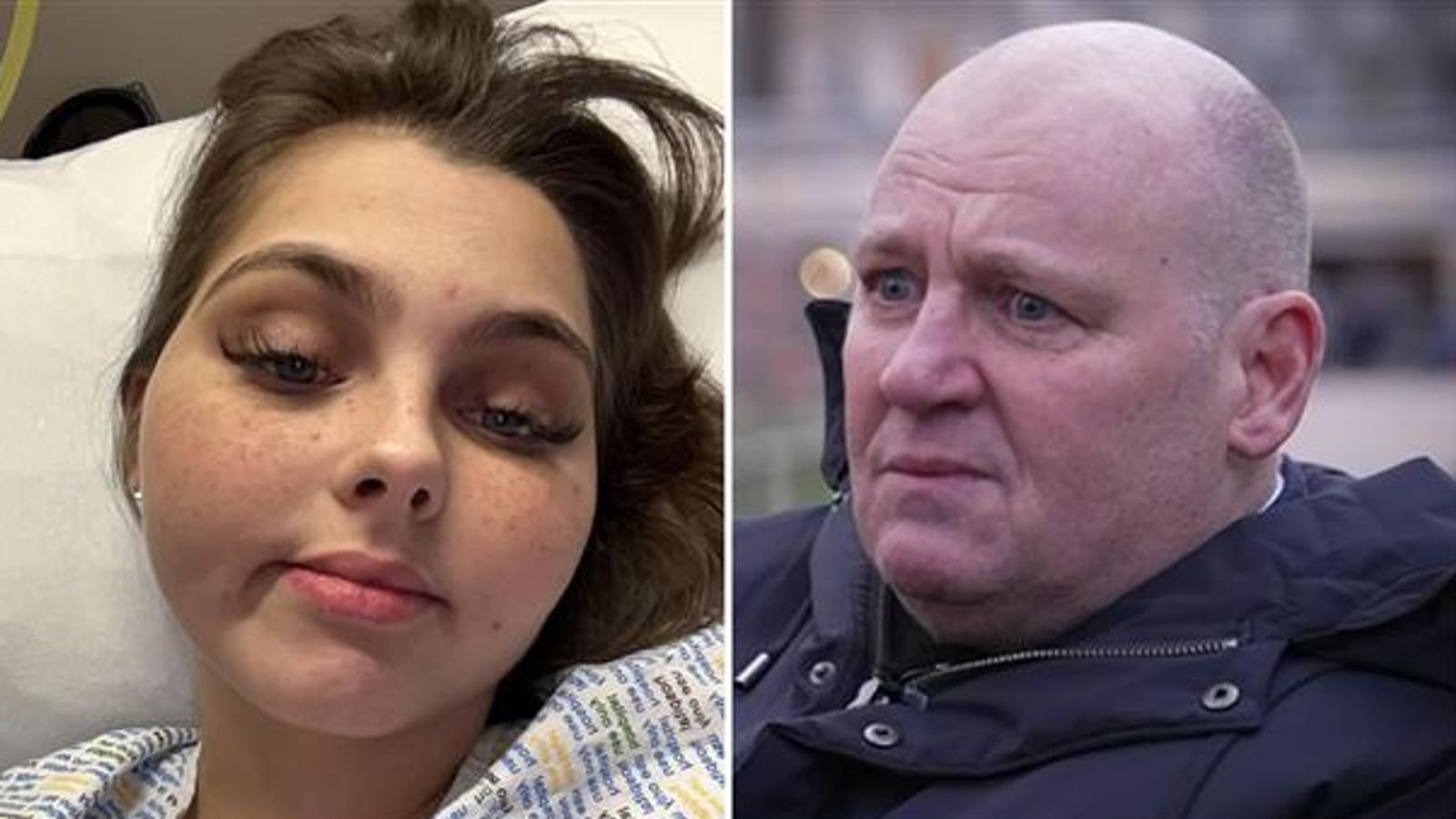
Tragic Failures at Glasgow’s Super Hospital Under Scrutiny
The case of Molly Cuddihy, a young cancer patient whose life was tragically cut short due to hospital failings, has sparked renewed scrutiny of the Queen Elizabeth University Hospital (QEUH) in Glasgow. In the wake of allegations of a contaminated water supply and subsequent infections, families are calling for accountability from health authorities.
The Heartbreaking Story of Molly Cuddihy
Molly was diagnosed with cancer at the age of 15, only to later contract an infection that her family believes was linked to tainted hospital water. Her father, John Cuddihy, expressed profound sorrow over institutional failings that he feels contributed to his daughter’s untimely death. “It was a consequence of… the infection that should never have happened,” he lamented, highlighting the devastating impact on Molly’s quality of life.
Despite extensive treatment from what her father described as a “world-class” medical team, Molly passed away in 2025, after reportedly being informed about the infection’s environmental links. The Scottish authorities are now investigating her death, with prosecutors having classified Glasgow’s NHS as a suspect in a corporate homicide inquiry.
The Water Crisis at QEUH
The controversy centres around the QEUH, which cost nearly £1 billion to build and opened in 2015. Shortly before its inauguration, whistleblowers had leaked reports suggesting significant risks related to the hospital’s water supply. Since its opening, several children have died and over 80 have suffered illnesses believed to be associated with the facility.
Until recently, NHS Greater Glasgow and Clyde had consistently denied any connection between these bacterial infections and the facility’s water systems. However, a recent admission suggests some infections may indeed have been linked to the hospital’s water supply, compelling health leaders to issue a “full and unreserved apology” to affected families.
Environmental and Safety Concerns Raised by Whistleblowers
Dr. Christine Peters, a consultant microbiologist and whistleblower at QEUH, raised alarms shortly after the hospital’s opening. Despite encountering resistance and intimidation from senior officials, she continued to advocate for patient safety. “I don’t have the evidence that satisfies me” regarding the hospital’s current safety, Dr. Peters stated, emphasizing the urgent need for transparency and acknowledgment of existing issues.
Other Families Share Similar Experiences
The tragic story of Milly Main, another young cancer patient who passed away in 2017 after developing an infection linked to the hospital’s water while undergoing leukaemia treatment, has also brought additional attention to the crisis. Milly’s mother has gone so far as to describe her daughter’s death as murder, leading to calls for a thorough inquiry.
Similarly, Charmaine Lacock recounted her daughter’s struggle with life-threatening infections during cancer treatment, citing ineffective communication with health officials as a significant obstacle in seeking answers. Both mothers have expressed distrust towards the hospital’s management and the culture of denial that has reportedly permeated the institution.
Government and NHS Responses
NHS Greater Glasgow and Clyde have admitted to some failings in communications but has firmly rejected accusations of a deliberate cover-up. The trust has stressed that safety remains their highest priority, stating that significant preventative measures have been introduced to address previously identified issues.
Conversely, families remain concerned that these assurances may not adequately address the underlying problems, especially with persistent allegations of inadequate safety measures and accountability regarding the hospital’s environment.
Background
This ongoing crisis highlights critical challenges in maintaining patient safety and transparency within UK healthcare institutions. The revelations, combined with vocal accounts from affected families, underscore the need for reform and prevention of similar tragedies in the future.
The impact of this crisis is far-reaching, prompting discussions on patient rights, safety protocols, and the overarching responsibilities of healthcare providers to guarantee the well-being of those under their care.
Source: Original Article






