






















Trump’s Greenland Ambitions Spark Global Concerns
Former US President Donald Trump has reiterated his desire to secure Greenland for the United States, expressing concerns over potential control from Russia or China. Amid rising geopolitical tensions in the Arctic, Trump’s statements have raised questions regarding the implications for international alliances and regional stability.
Trump’s Position on Greenland
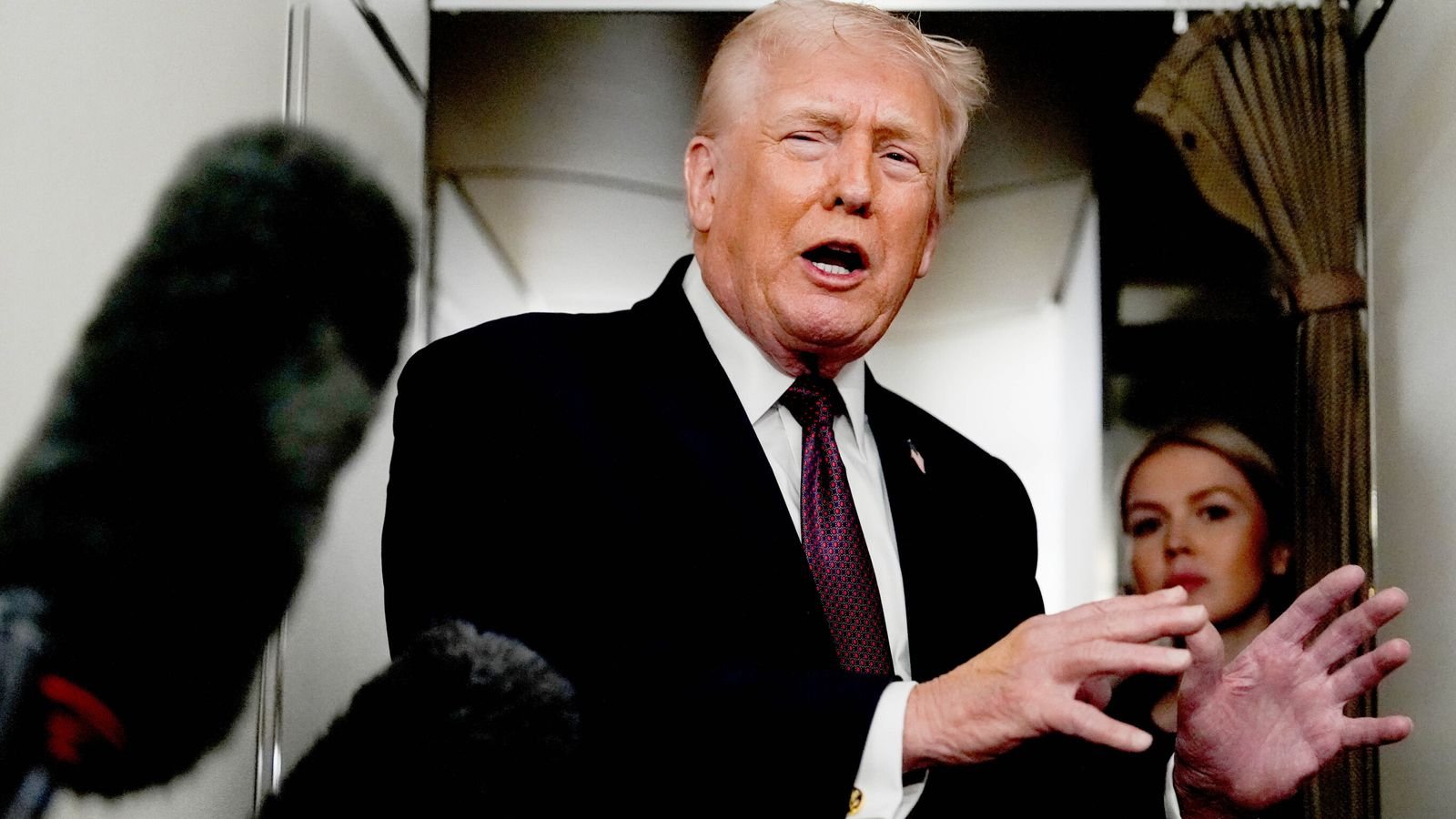
Speaking to reporters aboard Air Force One, Trump asserted that acquiring Greenland would be preferable through negotiations rather than military action. He stated, “If we don’t take Greenland, Russia or China will take Greenland, and I’m not gonna let that happen.” His comments suggest a determination to secure US interests in the territory, which is currently a part of Denmark.
The former president claimed that Greenland would benefit from enhanced ties with the US, particularly regarding defence. He argued that a US presence would deter foreign powers in the region, although he provided no evidence to support his claims about Russian and Chinese military activity near the island.
Implications for NATO
Trump acknowledged that a US acquisition of Greenland could strain NATO relationships. However, he maintained that the alliance relies more on the US than vice versa. He stated, “If it affects NATO, it affects NATO. But they need us much more than we need them.” This brings into question the future cohesion of NATO as member states navigate these complex geopolitical discussions.
International Reactions
The Danish government has dismissed Trump’s assertions regarding Russian and Chinese naval presence around Greenland, stating there is no evidence to support such claims. Meanwhile, independent news sources have noted a lack of tracking data confirming Russian or Chinese vessels near the territory.
In light of Trump’s statements, the UK government has reportedly been in discussions with other NATO allies about deploying British troops to Greenland. Sir Keir Starmer, leader of the Labour Party, recently communicated with Trump, suggesting that more should be done to protect the Arctic from perceived Russian advances.
Background
This dialogue arises from long-standing concerns about Arctic security as global powers increase their presence in the region. In 2018, China declared itself a “near-Arctic state” and has sought to expand its influence through initiatives such as the “Polar Silk Road.” The situation further complicates as international scrutiny shifts toward Arctic policies amid climate change and resource competition.
Future Considerations
Looking ahead, US Secretary of State Marco Rubio is scheduled to meet with Danish officials next week to address the Greenland issue further. In a notable development, White House aides have reportedly considered financial incentives for Greenlanders to promote a shift away from Danish governance and closer ties with the US.
Greenland, home to approximately 57,000 residents, relies on Denmark for defence, prompting questions about the feasibility and morality of Trump’s approach to acquiring the territory. The situation continues to evolve, with the potential for significant ramifications for international relations and Arctic policy.
Source: Original Article






