






















Neuralink’s Brain Chip Trial in the UK: A Life-Changing Innovation for the Paralyzed
In a groundbreaking development, a volunteer in the UK’s first trial of Elon Musk’s Neuralink brain chip describes the experience as “magical.” This pioneering technology, aimed at assisting individuals with severe paralysis, could potentially revolutionize their lives by enabling them to interact with devices using thought alone.
The Journey of Sebastian Gomez-Pena
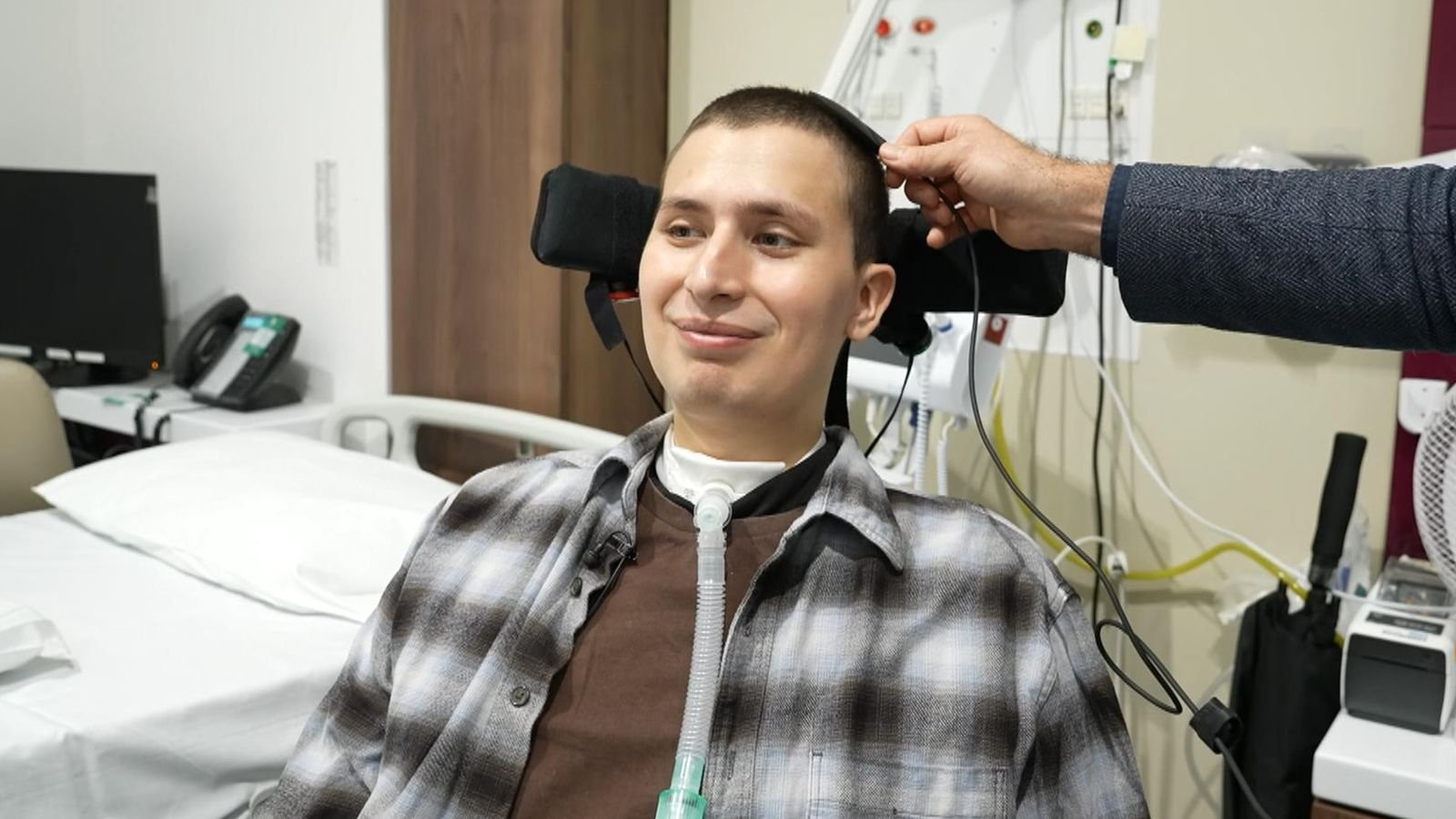
Sebastian Gomez-Pena, a medical student who was left paralyzed from the neck down after an accident, is one of seven participants in this trial. This chip, which interfaces with 1,024 electrodes implanted in his brain, signifies a dramatic shift in the lives of those who struggle with movement. “It’s a massive change when you can no longer move your limbs,” he noted, expressing hope that this technology offers a new lease on life for him and others in similar situations.
A Complex Procedure
The chip installation took place during a five-hour surgery at University College London Hospital (UCLH). This complex operation involved British surgeons and Neuralink engineers, with the robot R1 performing the delicate task of inserting electrodes into Seb’s brain to detect nerve signals related to hand movements.
The electrodes transmit data through thin threads to a chip embedded in Seb’s skull. This system allows artificial intelligence software to interpret the signals, enabling Seb to manipulate a laptop cursor simply by thinking about hand movements. “When I imagine moving my hand, it’s amazing to see that something happens,” he remarked, demonstrating significant control as he navigated his screen with extraordinary precision.
Early Results and Future Potential
While the trial is still in its infancy, early feedback is optimistic. Neurosurgeon Mr. Harith Akram expressed that the progress demonstrated by Seb could be a transformative advancement for those with severe neurological issues. “This technology has the potential to be a game-changer,” he stated, emphasizing its importance in aiding independence for disabled individuals.
Neuralink’s broader mission aims to “restore autonomy to those with unmet medical needs,” extending not only to movement control but also targeting other areas such as speech restoration and even reversing blindness through deeper implants. These ambitions, however, still face significant engineering challenges.
Societal Implications and Ethical Considerations
This trial raises crucial questions regarding user safety and privacy in the sphere of brain-computer interfacing. As the technology continues to develop, further trials will be needed to establish long-term reliability and safety before any mass adoption can occur.
Background
Neuralink has invested nearly two decades in developing this device, with its first human implantation occurring in a US volunteer two years prior to this UK trial. To date, 21 individuals across the UK, US, Canada, and the UAE have had the device implanted, all suffering from severe paralysis due to various conditions.
While the potential benefits of this technology for individuals with paralysis and “locked-in” syndrome are clear, the ethical considerations surrounding its use present a complex landscape that society will have to navigate as the technology progresses.
As Elon Musk envisions users possibly interacting with robotic entities through this technology, the path forward must be paved with caution, research, and responsible innovation.
Source: Original Article






