US Unveils Phase Two in Gaza Conflict Resolution Efforts
Donald Trump’s special envoy, Steve Witkoff, has announced the initiation of the second phase of a plan aimed at resolving the ongoing conflict in Gaza. This new phase will focus on disarming Hamas, reconstructing the war-torn region, and establishing a governing body of Palestinian experts under US oversight.
Introduction of the National Committee for the Administration of Gaza
The newly proposed National Committee for the Administration of Gaza (NCAG) is designed to function as a transitional technocratic entity responsible for the region’s daily governance. This body will fall under the supervision of an international advisory group known as the “Board of Peace,” which will be led by former President Donald Trump.
Ceasefire and Its Implications
This second phase is part of a broader ceasefire agreement brokered by the United States, which came after two years of hostilities between Israel and Hamas. Witkoff explicitly stated that compliance from Hamas is expected, particularly the return of the remains of the final deceased hostage. Noncompliance may result in serious repercussions, he warned.
Challenges Ahead
According to Mark Stone, Sky News’ US correspondent, the task of disarming Hamas presents significant difficulties, with no concrete plans laid out for this process. Moreover, important priorities remain unaddressed, including the search for the last Israeli hostage’s remains, which have yet to be found.
Despite these hurdles, it appears that both the Israeli and Palestinian parties support the transition to phase two. Mediators, including Egypt, Turkey, and Qatar, have expressed approval of the NCAG and its proposed leader, Ali Shaath, a former deputy minister with the Palestinian Authority.
Leadership and Complexity
Israeli Prime Minister Benjamin Netanyahu has designated Nickolay Mladenov, ex-Bulgarian defence and foreign minister, as the director-general of the Board of Peace. However, analysts caution that significant challenges lie ahead, particularly the requirement for Hamas to disarm—an undertaking described as a Herculean task.
Background
The ceasefire agreement, part of Trump’s comprehensive 20-point plan, has seen mixed outcomes since its implementation in October. Various obstacles complicate its execution, including accusations of violations from both Hamas and Israel, delays in reopening Gaza’s Rafah border crossing, and ongoing airstrikes resulting in civilian casualties.
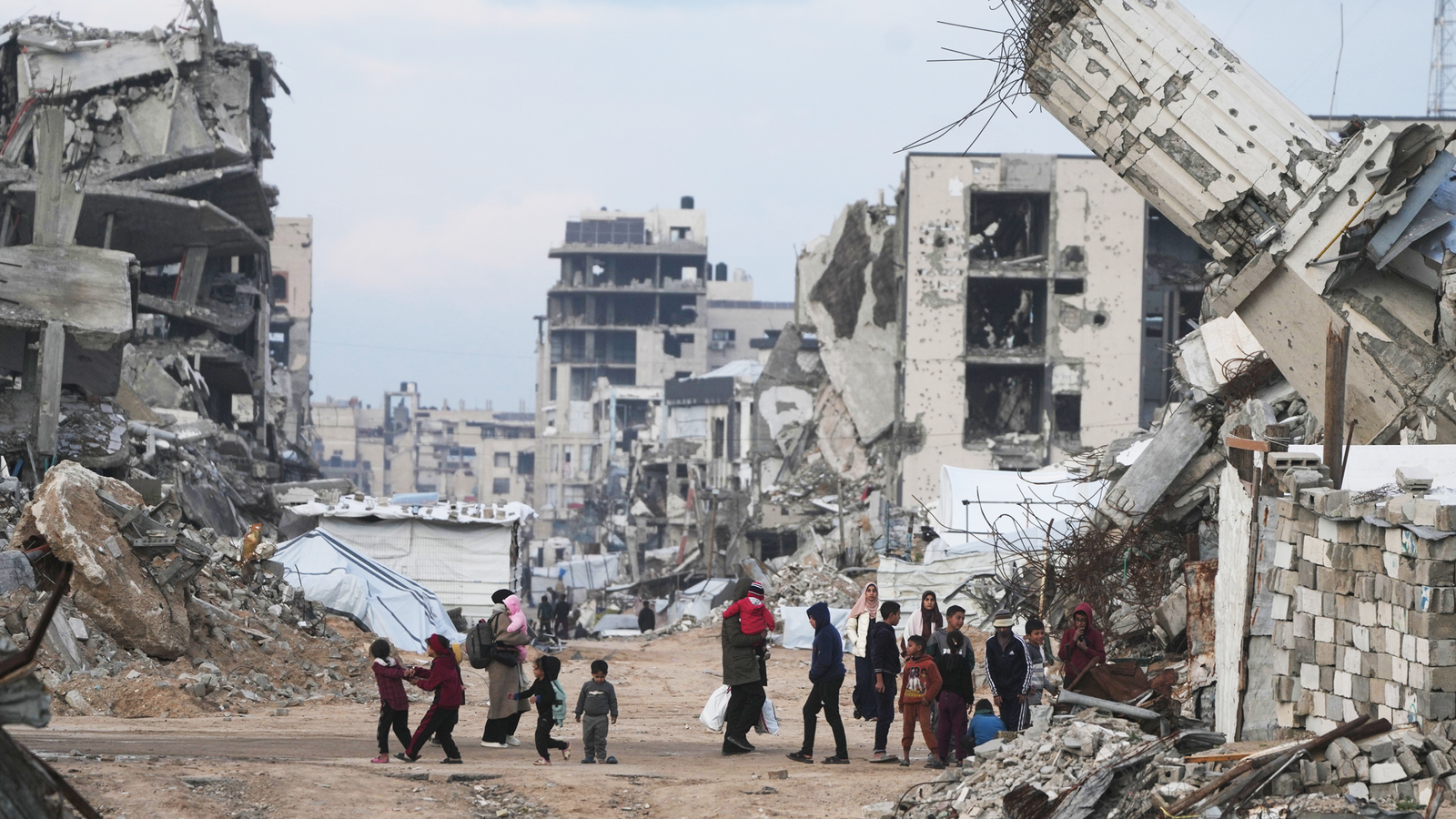
The United Nations has projected that the financial cost for reconstruction in Gaza will exceed $50 billion (£37 billion), a process that may span several years with limited funding currently committed.
Source: Original Article