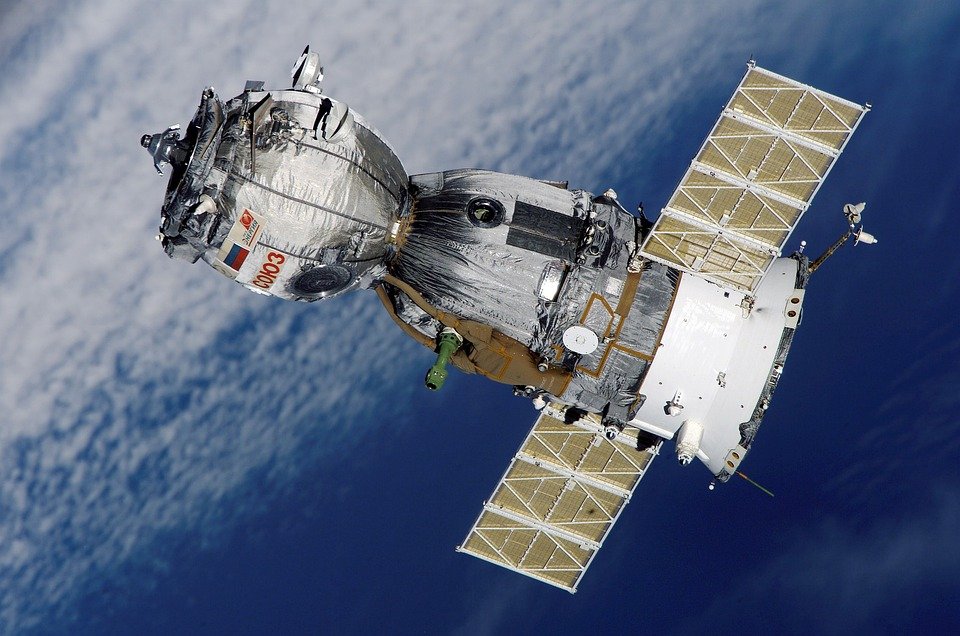
Introduction to Satellite Orbits
Satellite orbits are a fascinating demonstration of the fundamental principles of physics, particularly gravity and velocity. Understanding the dynamics of how satellites function helps us appreciate their crucial role in communication, weather forecasting, and navigation. This article explores the science behind satellite orbits, focusing on gravity and the physics of motion.
Understanding Gravity
Gravity is a fundamental force that attracts two masses toward each other. Sir Isaac Newton, in the 17th century, formulated the law of universal gravitation which states that every point mass attracts every other point mass in the universe. The strength of this attraction is given by the equation:
F = G * (m1 * m2) / r²
Where:
- F is the gravitational force between the two masses.
- G is the gravitational constant.
- m1 and m2 are the masses of the two objects.
- r is the distance between the centers of the two masses.
The Role of Velocity
Velocity is crucial for understanding satellite motion. A satellite must travel at a specific velocity to maintain its orbit around a celestial body, such as Earth. If a satellite travels too slowly, it may be pulled back to the surface; if it travels too quickly, it may escape gravitational pull altogether.
The required orbital velocity can be derived from Newton’s laws of motion and his law of universal gravitation. For a satellite at a low Earth orbit, the orbital velocity is approximately 7.8 kilometers per second (about 28,000 kilometers per hour).
Types of Orbits
There are several types of orbits that satellites can occupy, defined by their altitude, inclination, and purpose:
- Geostationary Orbit: A satellite remains fixed above one point on the Earth’s surface, typically at an altitude of about 35,786 kilometers. It matches the Earth’s rotation period.
- Low Earth Orbit (LEO): These satellites orbit at altitudes between 160 to 2,000 kilometers and complete an orbit around the Earth in approximately 90 minutes.
- Polar Orbit: A satellite in this orbit passes above the Earth’s poles, allowing it to scan the entire surface of the Earth as it rotates beneath it.
Conclusion
The physics of satellite orbits encapsulates the intricate dance between gravity and velocity. By adhering to the laws of motion and gravitation, satellites can achieve stable orbits, enabling technological advancements that benefit society. As we continue to explore the cosmos, our understanding of these principles remains essential in the design and deployment of satellite technology.